


When launching a product, a company should carefully consider its pricing to make it attractive to the target audience and ensure guaranteed profits. Price intelligence (PI) is an advanced approach to setting prices, as it enables businesses to maintain flexibility, adapt to changing market requirements, and gain a competitive edge. In this guide, we will explore the meaning of the term and consider the steps ventures take to adopt efficient tactics and increase their returns.
What is Price Intelligence?
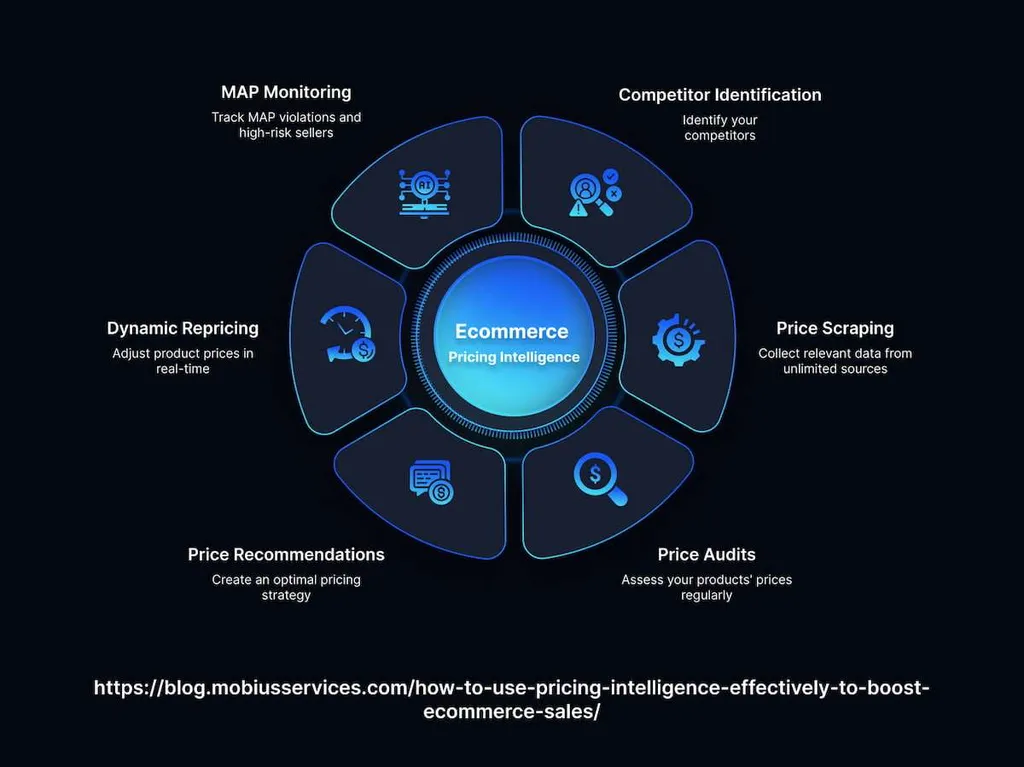
The term refers to the practice of collecting and analyzing information about competitors, current trends, and client behaviors to develop a results-driven strategy. It involves adopting dedicated tools to monitor current prices and understand the factors impacting the rates in a certain market segment.
Regardless of the area a business specializes in, PI tools help it better understand competitors’ tactics and identify adjustments to solidify its position in its niche. Firms use PI to make better decisions regarding a product promotion and earn higher profits.
Benefits of Price Intelligence
Understanding how much buyers will be willing to pay for a given item or service is never easy. Developing comprehensive strategies that bring tangible results requires understanding what makes clients satisfied. Here are the key upsides to using PI:
- Efficient pricing strategies. PI tools provide extensive data about trends and prices set by competitors. Companies should analyze this information to learn when and how much adjust prices to earn substantial profits without displeasing clients. A data-driven approach allows ventures to remain in an advantageous position. One should consider the logistics cost before choosing higher margins to avoid increasing rates too much. In some industries, reaching an 80% margin is necessary for a business to stay afloat.
- Market advantage. Extensive knowledge of the practices used by competitors empowers businesses and helps them identify potentially lucrative opportunities. Ventures use price intelligence to discover how to stand out among the rest and develop strategies that will help them achieve long-term sustainability. Extensive knowledge of the consumer decision-making process is also needed to succeed.
- Higher profits. It might be daunting to identify the best price points without using PI strategies. Firms rely on pricing intelligence to learn how to foster client loyalty, achieve consistent returns on their investments, and ensure recurring revenue.
- Dynamic pricing. Using dedicated software with PI tools capable of analyzing high volumes of data, companies can adjust prices automatically depending on demand, competitor strategies, and set objectives. Such tools enable firms remain competitive and make their products more appealing to potential buyers. For instance, by selling seasonal products at a discount in winter and making them 15% more expensive in summer, eCommerce businesses can ensure a stable cash flow and increase their annual revenue.
- Buyer satisfaction. The main goal of PI strategies is to ensure that a product’s price aligns with buyers’ expectations and fosters brand loyalty.
Analyzing consumers’ preferences and behaviors lets businesses choose optimal selling strategies. Firms can deploy multi-tiered subscription pricing for products to incentivize buyers to remain loyal to the brand or use other time-tested PI strategies.
How to Implement Price Intelligence
Small businesses often find it challenging to integrate automated solutions with legacy systems. They may lack the financial resources or the required expertise that would allow them to deploy such tools and refine their strategies. Here are the guidelines one should follow to achieve higher efficiency:
- Choose the right PI software. The advanced tools analyze competitive information with high accuracy and conduct in-depth market research. They integrate easily with existing tools and offer specialized features for analyzing consumer behavior. By deploying them, firms can collect more data and use these insights to make informed decisions.
- Choose key value items (KVIs). Such products and services increase the value of a brand in the eyes of potential customers. People often search for the newest smartphone and camera models. However, as such items are quite expensive, buyers are likely to compare the available offers and choose the ones that are cheaper or allow them to pay in multiple installments. Monitoring and lowering KVIs’ prices helps increase client retention and improve profitability.
- Monitor prices automatically. Every strong price intelligence strategy requires identifying lucrative opportunities and downsizing risks. AI-based tools can track promotions on other platforms in real time, allowing businesses to adapt their strategies to increase their market share.
- Use data from multiple sources. AI solutions analyze data from industry news, marketplaces, and popular websites to collect insights necessary for developing a strategy that could bring tangible results. Dedicated software creates a centralized repository for collected information, which facilitates analyzing client preferences, seasonal trends, and differences between various regions.
In addition, a store may deploy dynamic PI algorithms to automatically change pricing depending on current stock levels, promotions on other sites, seasonality, and other factors.
How to Optimize Your Pricing Strategy
Companies need to learn more about the tactics used by their competitors and discover what makes their products different from others. The eCommerce industry is highly competitive, so it takes a lot of effort to differentiate one’s offerings. Other companies may conduct their research as well, so it’s important to adjust your strategy whenever the changes are due. Besides, it’s necessary to monitor specific products and categories to understand what items might become bestsellers if they become more affordable. Here are some steps one should take to optimize their processes:
- Deploy price intelligence tools. After analyzing product catalogs from other firms, ventures need to select and deploy automated software to upload their listings, compare prices across competitors, and specify which companies to monitor. Competitor tracking software enables businesses to be notified when prices change and to act swiftly to make their marketing efforts more efficient and increase sales.
- Implement AI pricing rules. Automated solutions save ventures a lot of time and enable them to react to the changing situation. Businesses can specify that they want their prices to stay lower than the prices of their competitors. They can also experiment with different rules to see which strategies bring better returns. A/B testing facilitates choosing the approach that allows firms to maximize profit margins.
- Use tracking solutions. PI tools facilitate discovering when other merchants are out of stock and exploiting this situation for maximum benefit. This approach allows firms to stay competitive without selling products more cheaply.
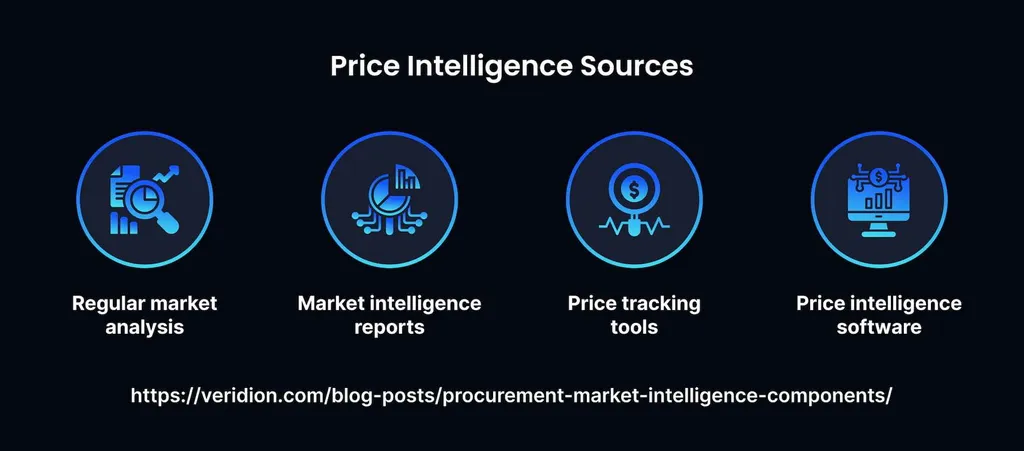
Choosing a comprehensive approach and using PI programs and features facilitates increasing profit margins and boosting sales.
Price Intelligence Applications
Companies successfully deploy pricing AI tools to collect, organize, and analyze large datasets. Artificial Intelligence helps businesses automate processes and make accurate predictions about future changes. Firms have already discovered the following applications of PI:
- Stock management. Large firms with facilities located across different countries may face difficulties when trying to analyze and handle the assortment of products without AI-based price intelligence tools. Dedicated PI solutions allow them to access data about availability at any time, negotiate with suppliers, and adjust a pricing strategy accordingly.
- Improved pricing data. Enterprise-level PI platforms facilitate obtaining information about marketing campaigns and other activities used by competitors. Besides, such tools simplify automated price monitoring and allow firms to visualize data in the form of comprehensive charts and graphs.
- Sales promotions. Making offerings more appealing to the target audience may require analyzing installment plans. PI practices enable firms assess credit options available on other platforms and introduce the necessary changes to make listings more attention-grabbing and motivating buyers to place orders.
- Content optimization. Firms use PI tools to learn more about the way their competitors promote their offerings. It’s important to take a closer look at the product photos, titles, and descriptions they use to learn how to boost sales.
As AI technology continues to develop, new applications of PI will be discovered, helping ventures to choose optimal prices and attract customers with appealing offers.
Final Thoughts
Firms leverage price intelligence to increase conversions and discover how to drive buyers to place orders. These days, it’s no longer enough to have good products in stock. Consumers may add them to their wish list and never buy them. Staying competitive requires leveraging PI and high-quality data to adjust prices at the right time, so buyers can see a product’s potential value and make a weighted decision to purchase. Market leaders use PI to outpace competitors and stay in control. However, building and deploying such solutions from scratch might be too expensive. This is why many companies outsource this task to third-party providers. MetaDialog builds powerful LLMs capable of processing high volumes of information, analyzing the situation, and making predictions. Get in touch with our team and discover how to use AI to increase the efficiency of your business.